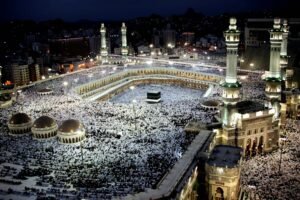
If you’re considering your first pilgrimage, you’ve likely come across two terms used together often: Hajj and Umrah. While both involve traveling to the sacred city of Makkah, they are not the same journey. Umrah is shorter, can be performed at any time of the year, and involves a smaller set of rituals — making it, for many Muslims, their first introduction to pilgrimage before Hajj later in life.
This guide explains what Umrah actually is, what it involves, and why it holds such deep significance for millions of Muslims who perform it every year.
What Does the Word “Umrah” Mean?
The word Umrah comes from an Arabic root that carries the sense of visiting a place held in high regard. In practice, it refers to a deliberate visit to the Kaaba in Makkah for the purpose of worship. Unlike Hajj, which is tied to a specific set of days each year, Umrah can be performed at almost any time — giving Muslims the flexibility to undertake this journey whenever they feel spiritually ready.
Umrah vs Hajj: What’s the Difference?
This is often the first question first-time pilgrims ask, and understanding it helps set the right expectations before booking a trip.
Hajj takes place during a specific period each year and is obligatory once in a lifetime for Muslims who are physically and financially able. It involves additional rituals beyond those of Umrah, including time spent in Mina, Arafat, and Muzdalifah, along with the symbolic stoning of the pillars.
Umrah, by comparison, is shorter — often completed within a few hours once at the holy sites — and does not require a specific time of year. While the majority of scholars consider it highly recommended (Sunnah Mu’akkadah) rather than strictly obligatory, many Muslims choose to perform it as often as circumstances allow, viewing it as a means of spiritual renewal.
The Four Rituals of Umrah
Every valid Umrah consists of four core acts, performed in a specific order. Understanding each one beforehand makes the actual experience far less overwhelming.
1. Ihram
This is the sacred state a pilgrim enters before crossing a designated boundary point (Miqat) on the way to Makkah. It involves a state of ritual purity, wearing the prescribed simple clothing, and making a clear intention (Niyyah) to perform Umrah. For men, this typically means two plain white unstitched sheets; for women, modest everyday clothing that meets Islamic guidelines.
2. Tawaf
Once inside Masjid al-Haram, pilgrims perform Tawaf seven circuits walked counter-clockwise around the Kaaba. This is often the moment first-time pilgrims describe as the most emotionally overwhelming part of the journey, as it’s typically their first close encounter with the Kaaba itself.
3. Sa’i
Following Tawaf, pilgrims perform Sa’i — walking seven times between the hills of Safa and Marwah. This ritual commemorates the story of Hajar searching for water for her son, and is performed as an act of remembrance and trust in Allah.
4. Halq or Taqsir
The journey concludes with either shaving the head completely (Halq) or trimming the hair (Taqsir), marking the formal exit from the state of Ihram.
Why Do Muslims Perform Umrah?
Beyond the physical steps, Umrah holds deep spiritual meaning for those who undertake it. Many pilgrims describe the journey as a chance to seek forgiveness, reset spiritually, and strengthen their connection to their faith — often choosing to go during periods of personal reflection or after significant life events.
The Prophet Muhammad (peace be upon him) is reported to have described Umrah as a means of expiation for sins committed between one Umrah and the next, which is part of why many Muslims choose to perform it more than once in their lifetime, circumstances permitting.
Can Anyone Perform Umrah?
Generally, any Muslim who is physically able and can afford the journey is eligible to perform Umrah. Unlike Hajj, there’s no fixed season, which means pilgrims can plan their trip around personal schedules, work commitments, or simply when they feel ready — though it’s worth noting that prices and crowd levels do shift depending on the time of year, particularly around Ramadan.
If you’re planning your first trip, our guide on how to prepare physically and spiritually for your first Umrah walks through exactly what to expect in the weeks leading up to your journey.
What Do You Need Before Booking Your First Umrah?
Beyond understanding the rituals themselves, first-time pilgrims need to prepare practically gathering the right documents, choosing a suitable package, and understanding what’s included in the cost. Our complete checklist of documents required for Umrah covers everything from passport requirements to vaccination certificates.
For many first-timers, traveling with an Umrah package guided by an Islamic scholar can also make a meaningful difference, since having someone explain each ritual in real time reduces the uncertainty that often comes with a first pilgrimage.
Traveling for Umrah with Family or Friends
Many pilgrims choose to perform their first Umrah alongside family members or close friends, rather than traveling alone. Beyond the emotional comfort of shared experience, group Umrah packages often work out more affordable per person, since transport and accommodation costs are shared across the group.
Plan Your First Umrah with Travelstation
Understanding what Umrah involves is the first step , the next is choosing the right package for your budget, timeline, and comfort level. As the best travel agency in Lahore, Travelstation offers a complete range of Umrah packages, from affordable customized options to premium packages with scholar-guided support for first-time pilgrims.
Travelstation, the best travel agency in Lahore, can help you plan every step of your journey — reach out directly to discuss which Umrah package suits your first trip.
Curious about costs before you book? Check out our complete breakdown of how much Umrah costs from Pakistan.